

International Expansion: 3 Questions to Ask Before Entering a Foreign Market

Introduction
International expansion is often considered the natural next step for a growing business.
New markets promise new customers, new revenue streams, and opportunities to strengthen competitiveness over the long term.
Yet many internationalization projects struggle not because of poor execution, but because some fundamental questions are never addressed before investing time and resources.
After more than 35 years in international business development, I have observed a recurring pattern.
Companies that successfully expand abroad almost always answer three questions before investing in commercial activities:
Why this market?
Why us?
Why now?
Simple questions.
Rarely simple answers.
Why This Market?
One of the most common mistakes is selecting a foreign market based solely on the perception of an opportunity.
A growing economy, a positive industry report, or a promising contact met at a trade fair can generate enthusiasm.
However, not every opportunity deserves investment.
Before entering a new market, a company should carefully evaluate:
Market size and growth potential
Real demand and customer buying behavior
Competitive landscape
Regulatory requirements
Distribution structures
Barriers to entry
A market may look attractive on paper and still offer limited opportunities for a specific product or service.
The objective is not to identify a market with opportunities.
The objective is to identify a market where the company can compete successfully and create value.
Why Us?
Many companies assume that success achieved in the domestic market can automatically be replicated abroad.
Reality is often different.
Customers in foreign markets may evaluate products and services according to completely different criteria.
What a company considers a strength may not be the deciding factor in a purchasing decision.
Before launching an international expansion initiative, every company should ask:
What unique value do we offer?
Why should a customer choose us instead of existing alternatives?
What problem do we solve better than competitors?
Is our competitive advantage truly relevant in this market?
Without clear differentiation, international expansion can quickly become a price-based competition with negative consequences for profitability and future growth.
Success depends not only on product quality.
It depends on providing a compelling reason to be chosen.
Why Now?
Timing is one of the most underestimated factors in international expansion strategies.
Many companies feel pressure to move quickly when an opportunity appears.
However, entering a market before being truly ready can create avoidable costs and risks.
Before expanding internationally, it is important to evaluate:
Available financial resources
Operational capabilities
Management commitment
Supply chain reliability
Customer support capabilities
Internal expertise
Even a highly attractive market can become a challenge if the organization lacks the resources necessary to execute the plan effectively.
The right market at the wrong time can produce disappointing results.
When Activity Replaces Strategy
Over the years, I have seen manufacturing companies and SMEs invest thousands of euros in:
International trade fairs
Distributor searches
Business trips
Sales activities
before validating these three fundamental questions.
The activity was there.
The clarity was not.
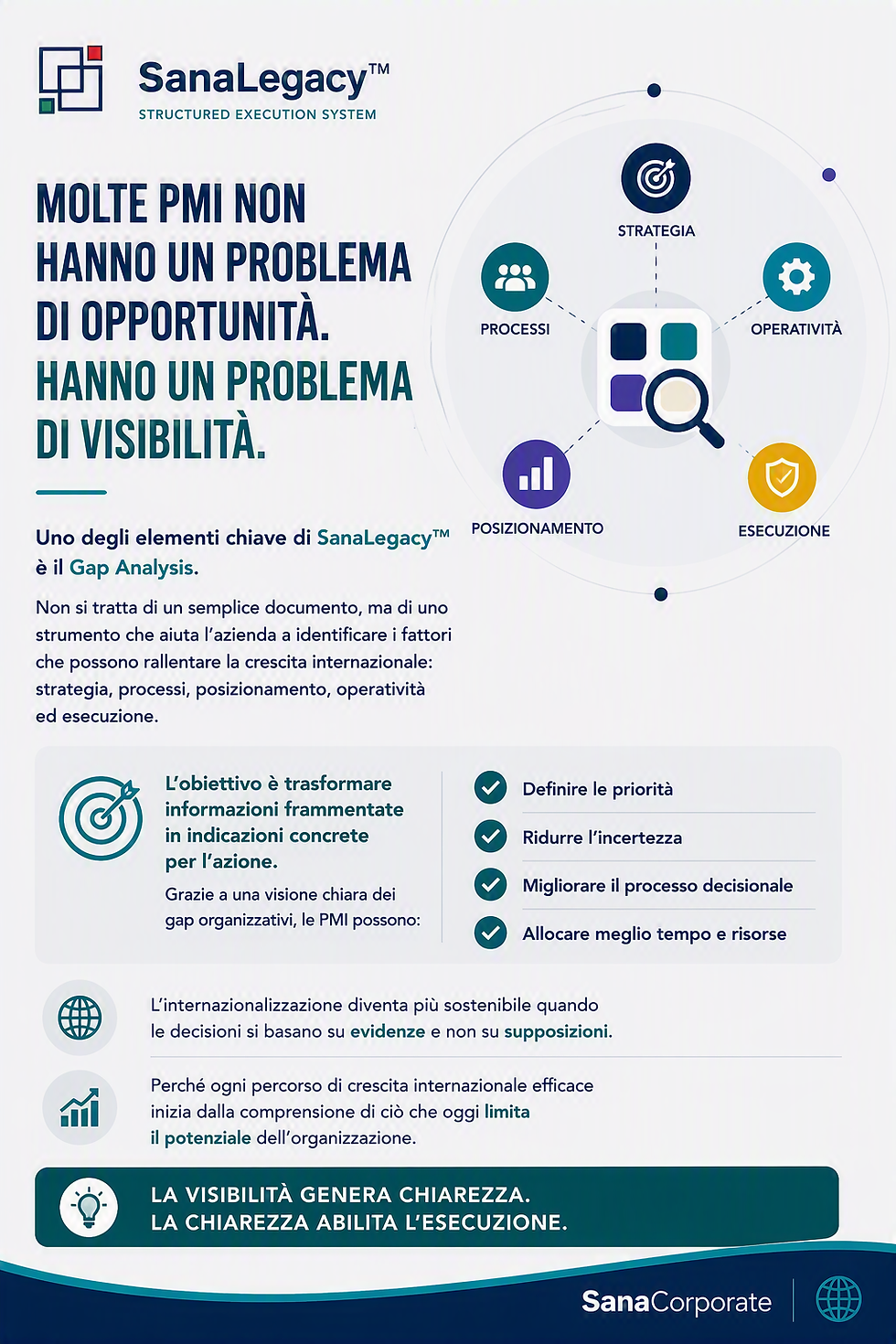
Too often, companies focus on execution before defining a strategic direction.
They search for customers before validating market demand.
They appoint distributors before clarifying their competitive positioning.
They invest in promotion before assessing their organizational readiness.
These decisions create movement.
Not necessarily progress.
International Growth Begins with Preparation
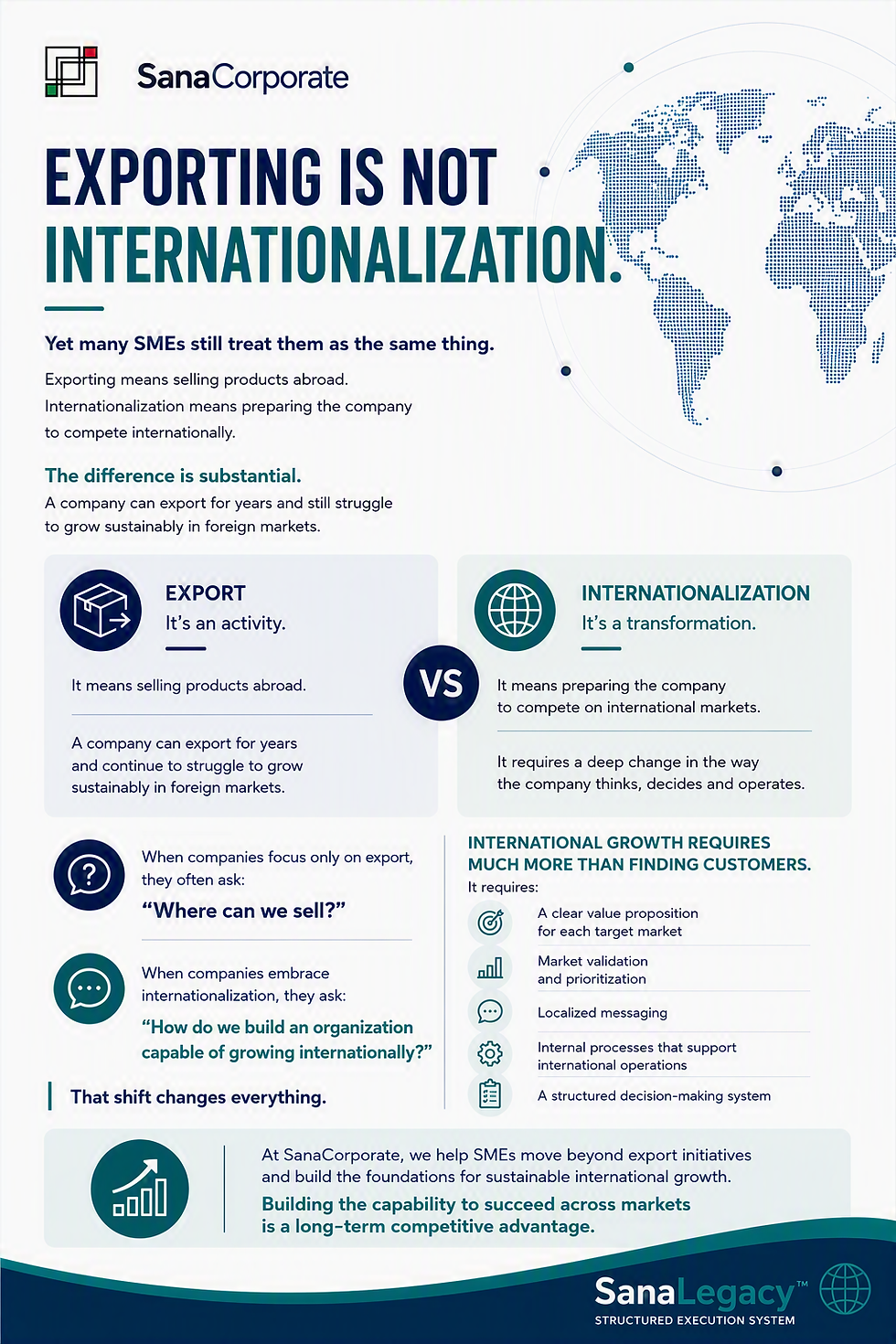
International growth does not begin with a distributor.
It does not begin with a trade fair.
It does not begin with a sales trip.
It begins with clarity.
Clarity about the market.
Clarity about the company's competitive advantage.
Clarity about timing.
Clarity about organizational readiness.
Companies that take the time to answer these questions are generally better able to allocate resources effectively, reduce risk, and build sustainable international growth.
A Final Reflection
Every foreign market offers opportunities.
The real challenge is understanding which opportunities are truly aligned with a company's strengths, capabilities, and strategic objectives.
Before investing in international expansion, stop and answer three essential questions:
Why this market?
Why us?
Why now?
Companies that answer these questions rigorously and thoughtfully are often the ones that build lasting international success.
Foreign markets reward preparation, not movement.
— SanaLegacy™


Comments